
One of the questions I get most often is this: where should I buy?
And my first answer is always another question: what are you actually looking for?
Because Playacar, North PDC and Tulum are not different versions of the same product. They are three markets with different logics, different buyer profiles and value propositions that don't compete with each other. Choosing the wrong area doesn't mean buying a bad property, it means buying the right property in the wrong place for you.
After nine years living and working on the Riviera Maya, this is what I explain to every client before recommending where to buy.
Playacar: order, community and the Riviera Maya without surprises
Playacar is the most consolidated development in Playa del Carmen. Two phases, the hotel zone to the north and the residential zone to the south, that together form one of the most established private communities in the Mexican Caribbean. Controlled access, tree-lined streets, golf course, beach, and a five-minute walk from Quinta Avenida.
The buyer profile that fits here is very specific. It's someone who wants to live or have a second home in Playa del Carmen, but who values order, security and an already-formed community over the urban energy of the center. Many are retirees or families with children. Many are international buyers, Canadians, Americans, Europeans, looking for a community where there are already people like them.
The inventory in Playacar is primarily resale houses and condominiums. There isn't much new construction because the development is practically built out. That has two implications: prices are more stable because there's no presale oversupply, but available inventory is more limited and you need to know how to look.
Prices per square meter in Playacar are among the highest in Playa del Carmen for residential product. A house in Playacar Phase II with three bedrooms, garden and access to the development's amenities can range from USD$400,000 to USD$900,000 depending on size, condition and location within the development.
The question I ask anyone considering Playacar: are you looking to live in an established community with clear rules, or are you looking for the energy of a city in motion? If the answer is the first, Playacar makes sense. If the answer is the second, you'll probably feel constrained.
North PDC: urban life, active market and the future of the center
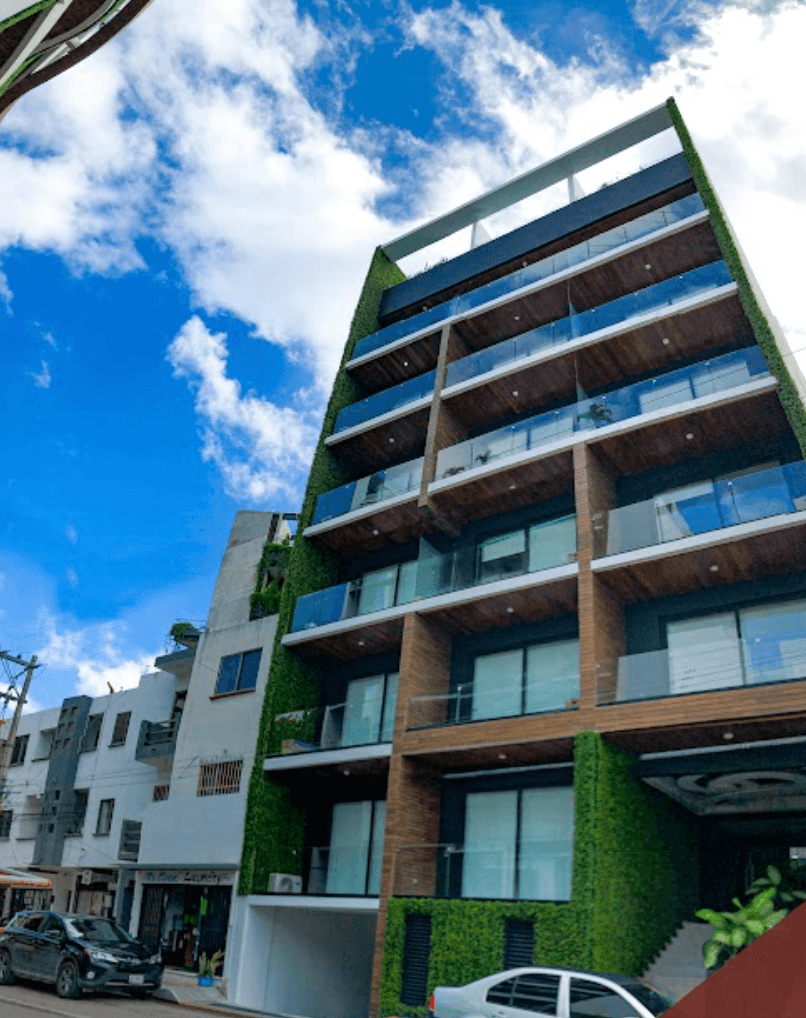
What many call North PDC is really a group of neighborhoods extending from downtown Playa del Carmen northward: Gonzalo Guerrero, Hollywood, Colosio, Luis Donaldo Colosio. It's the part of the city growing fastest in terms of new residential supply, private investment and presence of sophisticated international buyers.
This is where Viceroy Residences just arrived. This is where most of the new apartment projects oriented toward vacation rental and second homes are. It's the zone with the highest density of restaurants, cafés, coworking spaces, nightlife and walkable access to the beach and Quinta Avenida.
The buyer profile that fits North PDC is different from Playacar. It's someone younger or with a more urban mindset, who wants to be in the middle of the action. It could be an investor looking for vacation rental with strong occupancy and competitive rates. It could be a digital nomad who wants to actually live here, not in a residential bubble. It could be someone who values walking to everything.
The market here is more dynamic and also more heterogeneous. There are very well-documented projects and projects that require more scrutiny. There are developers with long track records and developers on their first or second project. That makes selection criteria more important, not less.
Prices vary significantly by distance to the sea, project type and amenities. A two-bedroom apartment in a well-located project in Gonzalo Guerrero or Hollywood can range from USD$280,000 to USD$650,000. Viceroy's branded residence starts at USD$370,000 for a one-bedroom.
The question I ask anyone considering North PDC: is your plan to live here, rent it out, or both? Depending on the answer, the type of project that makes sense changes significantly. Buying for short-term vacation rental is very different from buying to live in or for long-term rental.
Tulum: narrative, lifestyle and a long-term bet
Tulum is a different market in almost every sense. It's not an extension of Playa del Carmen, it's another destination, with another identity, another market logic and another risk profile.
What Tulum has that no other Riviera Maya destination replicates is a very powerful global narrative. Tulum is known worldwide as a destination for luxury, wellness, design and nature. That narrative attracts a very specific international buyer profile: someone willing to pay a premium for the destination's image, who understands they're making a long-term bet and who has tolerance for regulatory and environmental risk.
And that risk is real. Tulum has grown faster than its regulation. The municipality of Solidaridad has 184 vertical projects under construction, according to the Business Real Estate Council. The proportion of developments with complete files, permits in order and full legal certainty is lower here than in Playacar or PDC. That doesn't mean all projects are problematic, but it does mean due diligence in Tulum requires more care, not less.
The buyer profile that fits Tulum is someone who understands that bet. Who doesn’t need the asset to generate immediate rental income. Who believes in the destination over ten years. Who has the financial capacity to wait if the project takes longer than expected. And who will scrutinize permits carefully before signing.
Prices in Tulum have risen significantly over the last five years. A two-bedroom apartment in a well-located project in Tulum's hotel zone can range from USD$300,000 to USD$700,000. In the ultra-premium segment, tickets go considerably higher.
The question I ask anyone considering Tulum: are you buying the destination or are you buying the asset? If the answer is the destination, Tulum has very solid arguments. If the answer is the asset and you need delivery certainty, immediate occupancy and predictable returns, Tulum’s risk profile may not be the most suitable for you.
The right area doesn't exist. The right area for you does
After nine years accompanying buyers on the Riviera Maya, the conclusion that comes up most often is this: the wrong area isn't the one with the worst numbers. It's the one that doesn't match what that person actually needs.
I've seen Playacar buyers who got bored because they wanted more urban life. I've seen Tulum buyers who got frustrated because the project took longer than expected and they needed the returns sooner. I've seen North PDC buyers who didn't know their condominium's bylaws didn't allow short-term rental.
All of those situations are avoided with an honest conversation before looking at properties. Not about which area is trending or which has the best price per square meter right now. But about what you want to do with the property, in what timeframe, with what budget and with what risk tolerance.
That's what we do at Reference before showing any property.
If you're evaluating where to buy on the Riviera Maya and want to have that conversation first, we'd love to have it.
Nat Vázquez
Certified Real Estate Advisor · Reference Real Estate
📍 Playa del Carmen, Quintana Roo
📱 +52 (984) 195-0103
Did you enjoy this analysis? Join our WhatsApp community for more content on the Riviera Maya real estate market.
Join